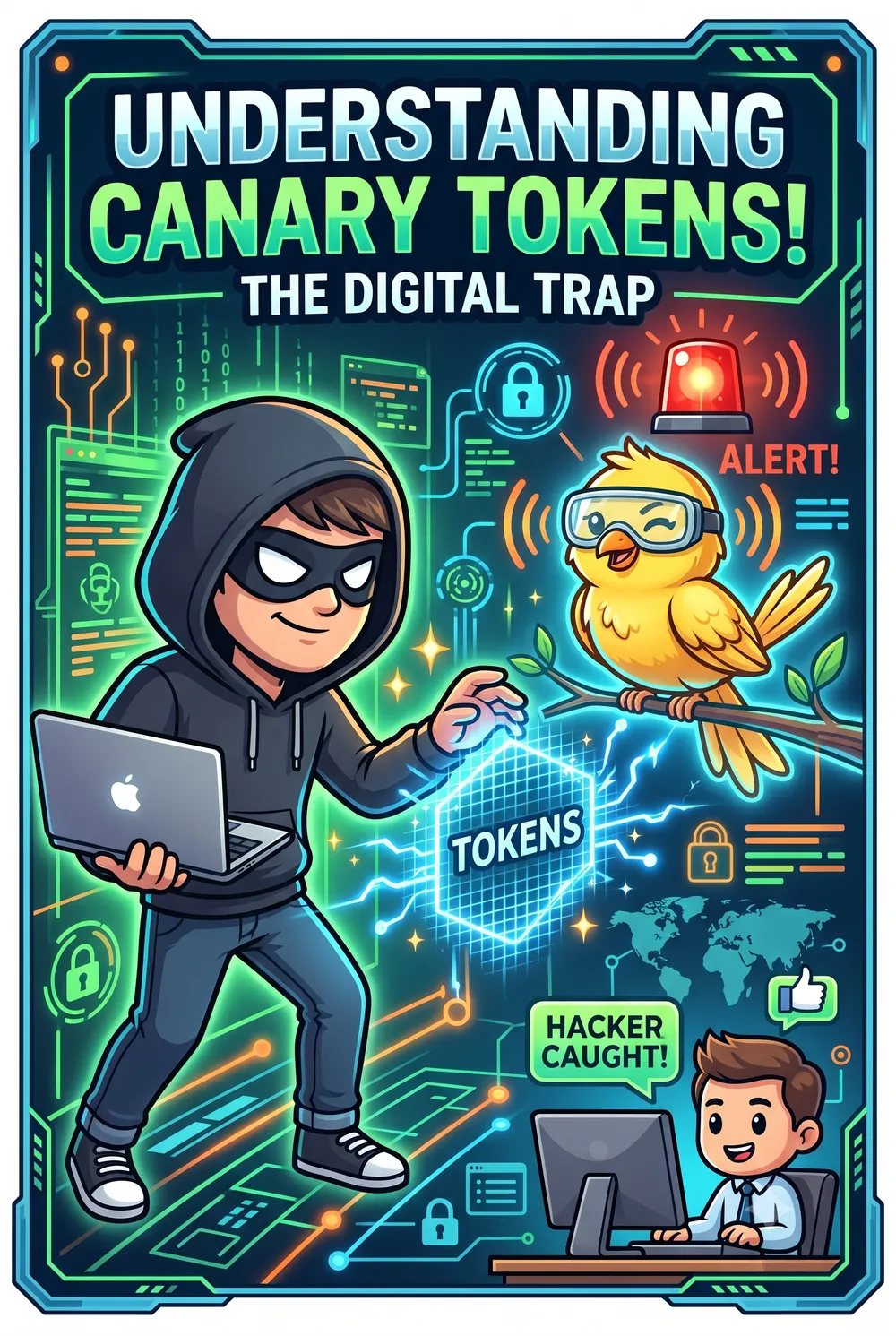

Understanding Canary Tokens in Cybersecurity
Let me explain a very interesting concept used in cybersecurity called Canary Tokens.
Imagine you place a file on a DMZ server, internal server, or a shared network location. The file may have an attractive name such as:
- VPN_Credentials.txt
- Passwords.txt
- Important_Files.txt
- Admin_Access.xlsx
Of course, these are not real files containing sensitive information. They are intentionally created as fake files.
The idea is simple:
A legitimate user has no reason to open these files. However, an attacker, insider threat, or unauthorized user searching for sensitive information will almost certainly try to access them.
The moment someone opens, downloads, or interacts with the file, an alert is triggered.
The security team can then collect valuable information such as:
- Who accessed the file
- Timestamp of the access
- Source IP address
- Device information
- Location information (if available)
- Access patterns and behavior
Real-World Analogy
Think of a bank placing a fake vault inside its building.
The vault contains no real money, but it is designed to attract thieves. The moment someone attempts to open it, alarms are triggered and security personnel are notified.
The fake vault is not there to protect money—it is there to detect attackers.
A Canary Token works in exactly the same way.
Why Are Canary Tokens Useful?
The goal is not to protect the fake file.
The goal is to:
- Detect attackers early
- Identify insider threats
- Gather intelligence about attacker behavior
- Understand attacker TTPs (Tactics, Techniques, and Procedures)
- Create an early warning system before real assets are targeted
By observing how attackers interact with these traps, organizations can strengthen their defenses and better protect their actual systems and sensitive data.
Key Takeaway
A Canary Token is essentially a digital tripwire.
It is a fake asset deliberately placed in an environment to attract attackers. When someone interacts with it, security teams receive an alert and gain valuable insight into potential threats.
Rather than waiting for attackers to compromise real systems, Canary Tokens help organizations detect and learn from suspicious activity at an early stage.
And that is the concept of Canary Tokens—creating controlled traps to detect, monitor, and understand threats before they can cause real damage.
Thank you so much.