
Preparing for a Cybersecurity Interview?
Good.
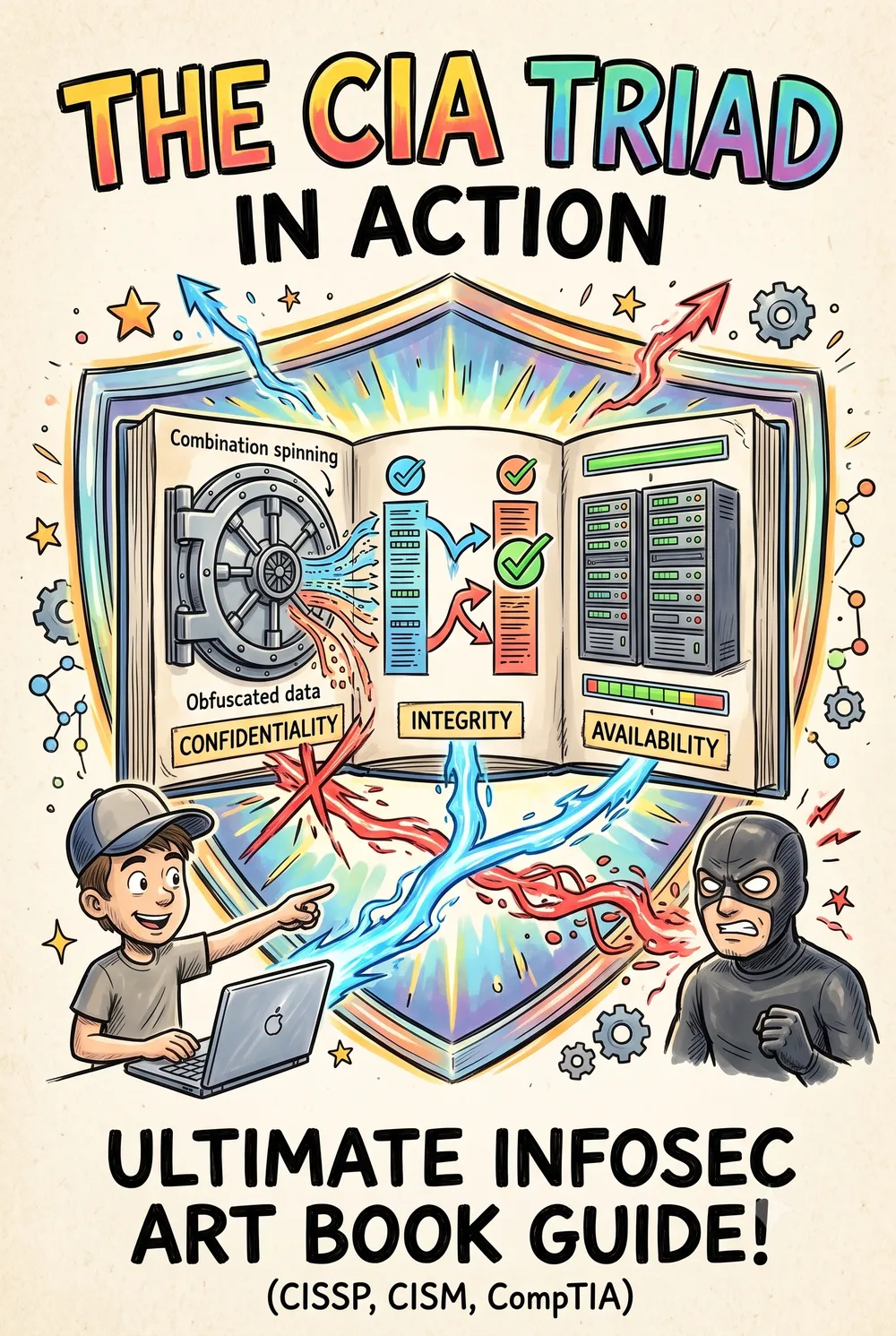
But don't just memorize that CIA stands for Confidentiality, Integrity, and Availability.
That's not enough.
Most freshers can tell you the full form of CIA.
The problem is that many cannot explain how these principles actually protect a real business.
Let's understand the CIA Triad using a hospital example.
1. Confidentiality
In a hospital, patient records should only be accessible to authorized people.
Not every employee.
Not every nurse.
Not every vendor.
Only those with a legitimate need to know.
To protect confidentiality, we implement controls such as:
- Multi-Factor Authentication (MFA)
- Role-Based Access Control (RBAC)
- Periodic Access Reviews
- Need-to-Know Principle
- Encryption
The goal is simple:
Protect patient privacy.
2. Integrity
Patient data must not be changed without authorization.
Imagine a patient's medicine dosage is accidentally changed from 5 mg to 50 mg.
That is not just a data error.
That is a life-threatening situation.
To maintain integrity, organizations implement:
- Audit Logs
- Digital Signatures
- Change Tracking
- Approval Workflows
- Version Control
The goal is:
Protect trust in the data.
3. Availability
Doctors must be able to access patient records when treatment is needed.
Imagine the hospital systems are down during an emergency.
Even if the data is confidential and accurate, security has failed because the information is unavailable when it is needed most.
To ensure availability, organizations use:
- Backups
- Redundancy
- Disaster Recovery Plans
- High Availability Architecture
- Resilient Infrastructure
The goal is:
Protect business continuity.
Remember This for Interviews
Confidentiality protects privacy.
Integrity protects trust.
Availability protects continuity.
And in healthcare, Integrity and Availability are often even more critical because cybersecurity isn't just about protecting systems.
It's about protecting people, decisions, and operations.
Another Example: Banking
Think about your online banking application.
Confidentiality
- Only you should be able to see your account details.
- Controls: MFA, encryption, RBAC.
Integrity
- Your ₹10,000 transfer should never become ₹100,000 because of unauthorized changes.
- Controls: Audit trails, digital signatures, transaction verification.
Availability
- The banking application should be available when you need to make a payment.
- Controls: Backups, failover systems, disaster recovery.
Key Interview Tip
Don't answer:
"CIA stands for Confidentiality, Integrity, and Availability."
Instead answer:
"Confidentiality protects privacy, Integrity protects trust, and Availability protects business continuity. For example, in a hospital, confidentiality ensures only authorized staff can access patient records, integrity prevents unauthorized changes to medication data, and availability ensures doctors can access records during emergency treatment."
That answer shows you understand security from a business perspective, not just from a textbook.